
2026
Master's thesis
A theoretical examination of the potential of scandals for societal transformations. In addition, a discussion of the strategies and mechanisms that lead to more constructive scandals.

Thesis
research
Theory
Transformation
potentials unlocked
Society
Team
Alexandra Heider
Supervisors
Prof. Gerhard Buurman & Romas Stukenberg
Roles
Research, Concept, Strategy
Context
Outrage is everywhere – is there anything good about it?
Scandals are complex and can lead to important changes – if used wisely.
Approach
The project employed a multi-stage Strategic Design process:
extensive literature research into functionalist scandal theory and empirical analysis, including a quantitative survey (92 participants) and qualitative expert interviews
shadowing activist groups and conducting internal strategy analyses of existing human rights campaigns, we identified specific "problem spaces" using methods like STEEP analysis and the Iceberg Model
The final artifacts were developed through iterative design thinking and design futuring methods (e. g. Futures Wheel, HMW questions)
Lastly prototyping to translate academic insights into intuitive, actionable tools
Short: analyzing the mechanisms behind scandals, developing a comprehensive model and making this knowledge available in the form of a handbook + a digital tool.


Outcome 1
A strategic compendium made of two parts:
Theoretical section – The typology of the scandal:
This section systematizes the mechanics of scandals – such as the "scandal triad," the five phases of attention, and the "bisociative shock" – to provide a deep understanding of how public norms are negotiatedStrategy Playbook:
A practical, tought-provocing guide that provides actionable frameworks, narratives, and planning tools (like SWOT analyses and roadmaps) to help users shift the public focus from individual "wrongdoers" to the underlying structural problems, taking into account what it takes to create constructive scandals
Outcome 2
An interactive digital prototype (MVP) designed to sharpen media literacy and critical reflection.
How it works:
Utilizing a logic-based matrix, the tool scans news headlines or articles to detect the normalization of injustice or the obscuring of responsibilities. It provides users with a "score" and reflective questions (e.g., "Who profits from this being seen as normal?") to transform immediate emotional reactions into solution-oriented discourse
It challenges seemingly ordinary topics that are actually scandalous.
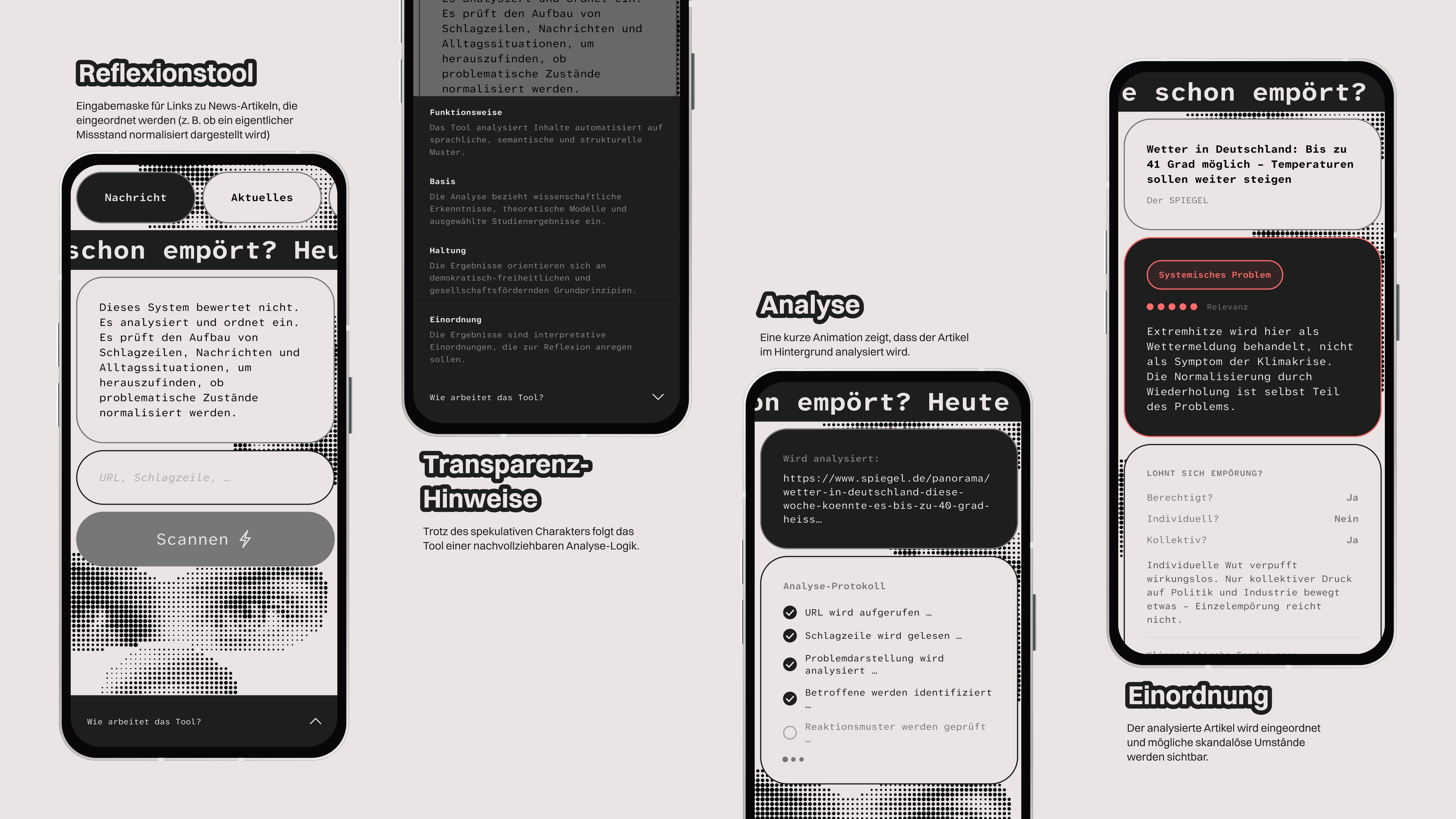
User flow
Browsing articles
Pasting an article link into the tool's input field
Article gets analysed
Results show if outrage is necessary, if information or responsibility is ignored and it it's a "hidden scandal"
🌞