2025/2026
Student Project
A design futuring project exploring how young people could contribute to society through civilian service rather than military duty. Addressing Germany's skilled labor shortage, it reimagines craft education as future-oriented and purpose-driven. Connecting mandatory service with modern learning, professional tools, and ecological responsibility.

Design Futuring
Scenario
Conceptual work
Analytical Design
Trends
Society
UX Design
Team
Alexandra Heider & Luisa Lamparter
Supervisors
Prof. Benedikt Groß & Prof. Leif Huff
Cooperation Partner
Festool GmbH
Roles
Research, Concept, Strategy, UX/UI Design
In a nutshell
Context
Increasing shortage of skilled workers
AI-Native's changing expectations on work
Reinvention of tools, workflows and business models
Climate change & sustainability
Contribution to society
Approach
By using Design Futuring methods we developed speculative scenarios for today's challenges – with a special focus on new opportunities for tool manufacturers.
Target groups are future generations alpha & beta.
Outcome
A civilian craft service for the youth as an alternative to military service. It introduces young people to sustainable skills, supports struggling businesses and creates lasting value for society, economy, and environment.
The idea is supported by three artifacts:
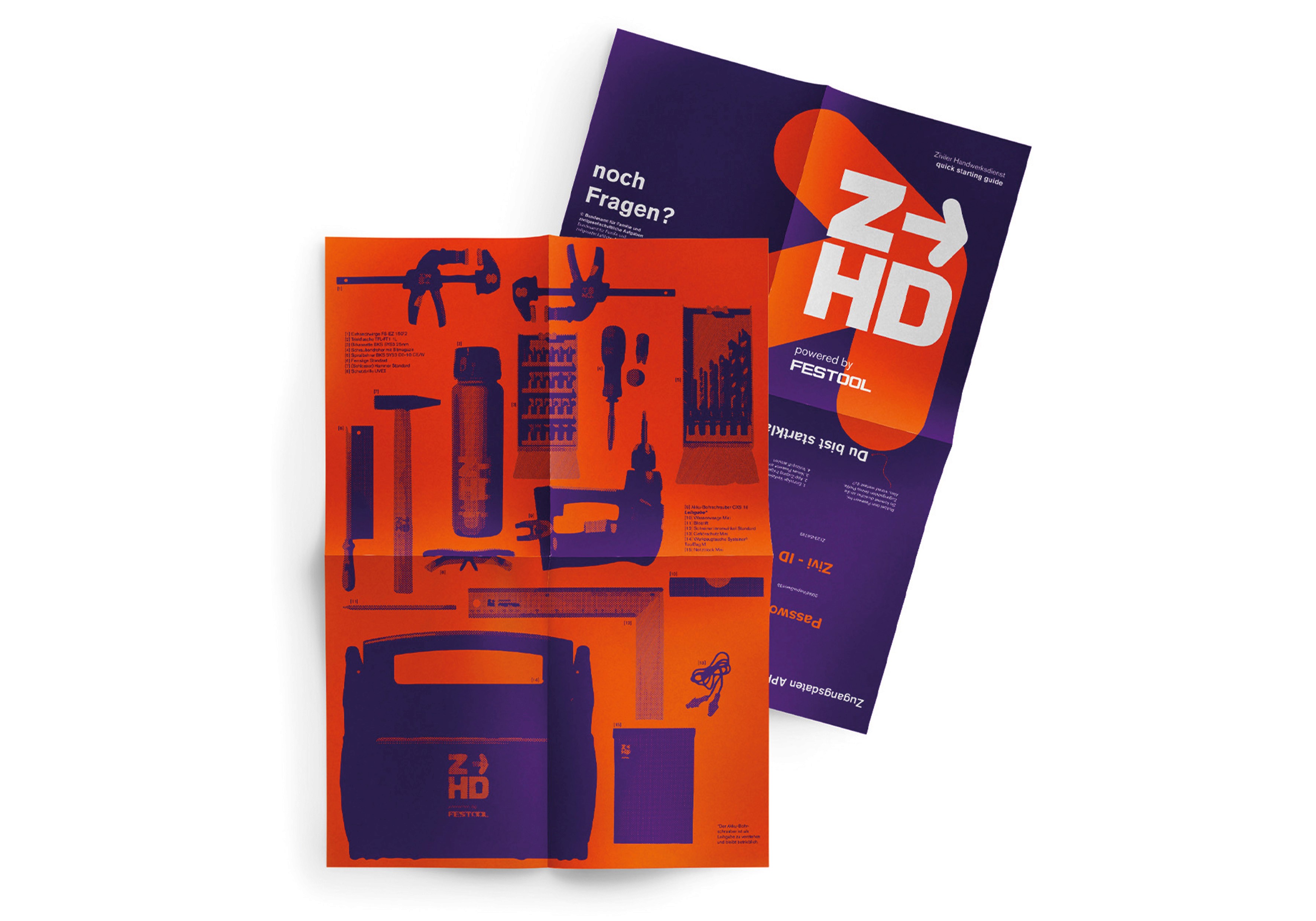
A Toolbag by Festool for the time of service
A Quick-Starting-Guide for onboarding
A tool app for the participants for learning skills independently
Process

Stakeholder Map

Power Map
Results
Civil Service
A government-initiated craft service consisting of:
Participants (generations α + β)
Craft businesses
Tool manufacturers
The idea itself is scalable and could be implemented into more sectors (e. g. health sector, social services)
Tool bag
A tool bag containing a carefully selected set of basic tools for simple manual tasks. The contents match the discipline – in our case, carpentry.
In addition to the basic tools, the business in which the service takes place lends a power tool from a refurbished line of the cooperating manufacturer.
Once the service is complete, the tool bag is given to the participants to encourage a lifelong repair culture.

App
The companion app teaches:
Fundamental craft skills
Safety and sustainability knowledge through bite-sized videos and interactive AR elements
Designed to minimize screen time, it ensures that users quickly return to the workbench.
Providing a digital community space to network, participate in challenges and track their skills with the tools.

Campaign
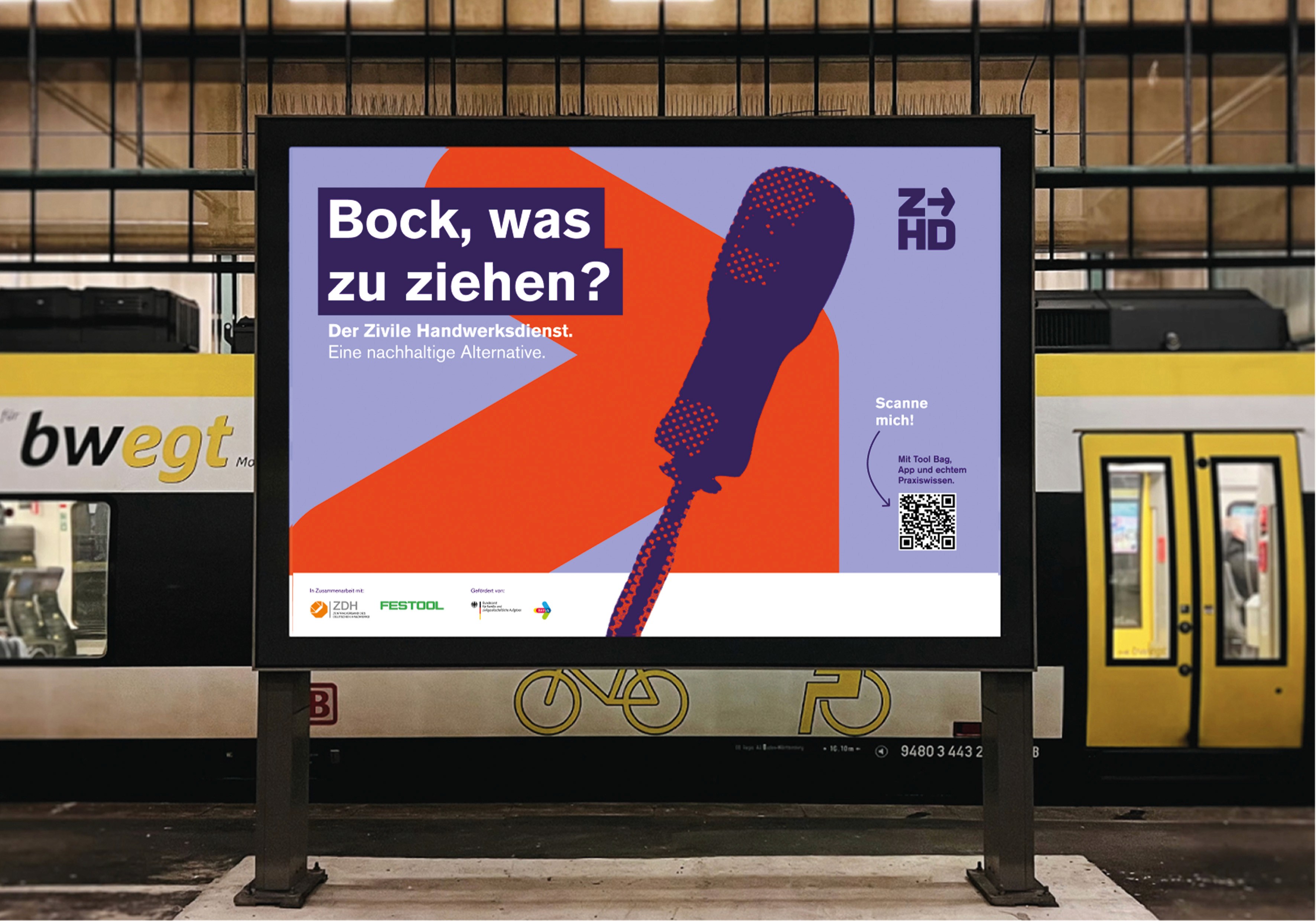
In order to reach young people and inform about the service possibility, public posters were developed.
Quick-Starting-Guide
The Quick-Starting Booklet features login credentials, an inventory checklist of the bag and a QR link to the central ZHD app.
This enables young workers to onboard independently and start their service without immediate supervision, directly relieving short-staffed businesses.